Cleared for Publication: Building a Newsroom-Ready Visual Asset Kit Before the Photo Desk Says No
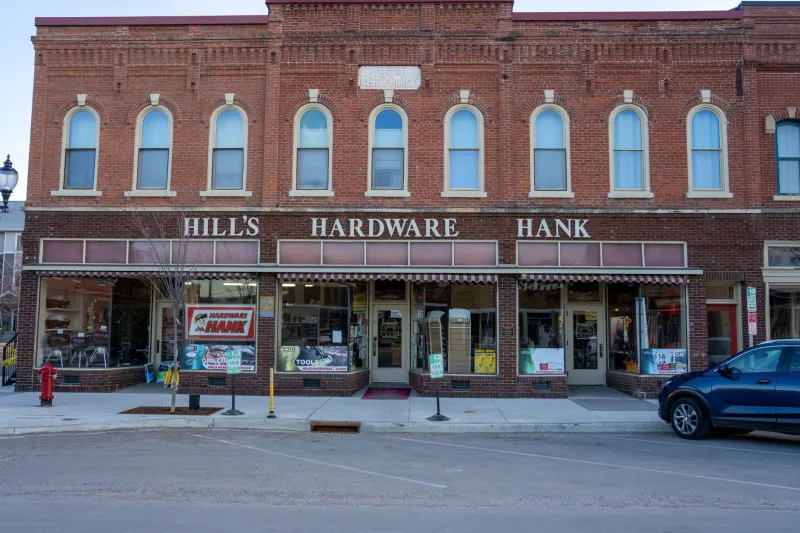
Photo: Pjotr Mahhonin, CC0, via Wikimedia Commons
The release cleared the business desk. The reporter asked two clarifying questions, promised to file, and then went quiet. Four days later the item ran — without the company in the lede. The story had not failed on a fact. It had failed on a file: the product shots were too small for the page template, the executive portrait carried no signed release, and the credit line named a photographer no one in the building could reach.
This is an ordinary sequence in American newsrooms, and it is why communications teams should treat the photo desk as a distinct audience rather than a downstream formality.
The gatekeeper nobody budgets for
Picture editors work against the same clock as reporters, but with far less room to hedge. A text editor can qualify a claim, attribute a figure, or soften a sentence. A picture editor cannot publish an image whose ownership is unclear. When rights are ambiguous, the default is not negotiation — it is deletion. The copy runs, the logo does not, and the brand's presence in the story quietly shrinks.
That asymmetry explains a pattern many founders recognize but few plan for: placements that are technically secured and practically diminished. The remedy is not more images. It is a smaller, better-labeled set that answers the questions a photo desk asks before anyone opens a browser tab.
What a picture editor resolves first
Four judgments tend to happen in the opening minutes, often in this order:
- Resolution and format. Will this hold at the size the page requires, or will it be soft on a retina display? Files under roughly 2000 pixels on the long edge are frequently set aside rather than resized.
- Rights. Is this ours to publish, for how long, and in what contexts? A verbal assurance from a vendor is not a rights answer.
- Provenance. Where did the image come from, who made it, and has it been altered?
- Caption integrity. Does the description identify people, place, and time accurately enough to stand under the image without the article text?
A kit that answers all four in one pass removes the most common reason for a story to be rescheduled past its news value.
Assembling the asset kit
Six to ten images will usually cover a corporate announcement, a product launch, or a partnership release. The mix matters more than the count: a clean hero shot on a neutral background, one in-context image showing use, a current executive portrait, a facility or team image where relevant, and the logo lockup in both light and dark treatments.
Deliver each file as JPEG in the sRGB color profile with a long edge of at least 3000 pixels, plus a vertical crop suited to mobile surfaces. File names should be descriptive rather than sequential — a picture editor working on deadline should not have to open five files to find the product in the headline.
A single-page manifest is worth more than it costs to produce. It lists every file, the subject, the rights holder, any restrictions, and a named contact who can answer questions within the hour. That contact is not a courtesy. In a breaking window, it is the difference between an image in the story and an image in the trash.
Rights language that survives review
Boilerplate permission language is where many kits quietly collapse. A durable grant names the licensing entity, not just the brand, and states that the license is perpetual, worldwide, non-exclusive, and cleared for editorial use. Anything narrower should be labeled as such on the manifest rather than discovered later.
Three supporting documents are frequently missing and frequently decisive:
- Talent releases for any identifiable person, including employees photographed in a way that makes them recognizable.
- Property releases for private locations, and a clear note when a location is public.
- Photographer agreements that transfer or license the specific images in the kit, not a general engagement letter.
Where third-party trademarks appear in a shot — a monitor, a vehicle, a co-branded display — a short note acknowledging their presence prevents a picture editor from assuming the worst.
The smallest files in the kit
Captions, credits, and alt text take minutes to write and are disproportionately responsible for whether an image publishes cleanly.
A working caption identifies who is pictured, what is happening, where, and when, with city and state spelled out. Credit lines should follow a fixed format and include the rights holder, not only the photographer's name. Alt text should describe the image in roughly 125 to 160 characters for readers using screen readers, without repeating the caption verbatim.
None of this is decorative. Caption errors generate corrections, and corrections are the one outcome a communications team can least afford during a launch week.
Disclosure for generated and retouched imagery
In 2026, newsroom standards increasingly require provenance statements alongside the file. If an image was generated with a model, say so plainly: the tool, the date, and the person who reviewed the output. If a product image is a rendering rather than a photograph, label it in the file name and the manifest.
Retouching warrants the same candor. Basic color correction and dust removal rarely raise questions. Removing an object, compositing two scenes, or extending a background does. Declaring it in advance builds the kind of trust that outlasts a single placement; concealing it invites a correction that outlasts the campaign.
Packaging and delivery
A kit delivered as a folder of unattributed attachments invites delay. Deliver a single link, kept live for at least thirty days, with subfolders for hero images, portraits, and logos, and the manifest at the top level. Avoid watermarks, embedded fonts, PDFs, and zipped archives with passwords. Include a note on whether the assets are embargoed and until when.
The cost of skipping it
The work involved is modest: a few hours with a photographer and legal counsel, a manifest template, and a standing rule that no release ships without its images attached. What it prevents is a specific and recurring failure — the story that runs, the brand that does not — and the slower damage of a communications team that appears unprepared when a reporter finally has room to include them.